AI checks crops plant by plant: a former Nikon engineer on automating crop research
Yuichi Ito saw deep learning's 2012 breakthrough up close as a Nikon image-analysis engineer. Now CTO of Chloros Inc., he explains how its drone-and-AI system SWALO automates the plant-by-plant visual checks that variety and pesticide trials have long relied on.
 DATA WORLD Editorial Team
Interview · 14 min
DATA WORLD Editorial Team
Interview · 14 min

Image analysis finds the features of people and objects in photos and video. As deep learning has advanced, that ability to "see" has spread into cameras, sensors and industry.
Now it is being put to work in agricultural research. The rice varieties we eat, and the pesticides and fertilizers used on farms, go through years of testing before reaching the market. In Japan, a new rice variety takes about 10 years to develop, as breeders pick plants with the traits they want from thousands produced by crossbreeding.
Along the way, trials are repeated again and again in test fields. Staff walk the trial plots, check by eye how many ears have formed and how far disease has spread, and write it all down. This visual survey takes a lot of time and labor, and results can vary from person to person (Chloros Inc.).
And the institutions running these trials have less and less to spare. At prefectural agricultural experiment stations (public research centers run by Japan's prefectures) and similar bodies, research staff numbers have fallen for 20 years as budgets shrank (Mitsubishi Research Institute).
The trials must go on, yet fewer and fewer people are available to look at the crops. Could images and data take over the looking? That is the question Chloros Inc. is tackling with its crop image analysis system, SWALO.
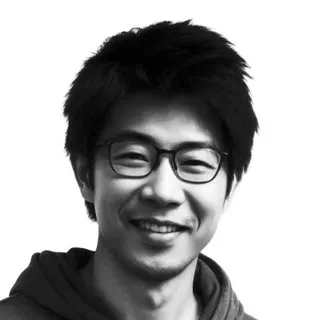
Leading the work is Yuichi Ito, who spent years researching image analysis in a camera maker's R&D division.

Yuichi Ito
Co-founder and CTO, Chloros Inc.
“Even what people overlook is still there in the image, as data.”── Yuichi Ito, in our interview
- 2007–Nikon, R&D divisionAbout 10 years researching image quality and the detection and recognition of people and objects
- 2011–2012Visiting researcher, Carnegie Mellon UniversityPresented image analysis research in the year deep learning broke through
- 2016–Japanese startup, then a global majorR&D on sensors and AR, then at a telecom equipment maker
- NOWCo-founder and CTO, ChlorosLeads development of SWALO, a crop image analysis system
After graduate studies in physics at Kyoto University, Ito spent about 10 years in Nikon's R&D division researching image processing and computer vision (technology that lets computers understand images). While at Nikon, he was a visiting researcher at Carnegie Mellon University in the US and presented his work at a workshop held alongside ECCV, a major international conference. He then did R&D at a Japanese startup and a major Chinese telecom equipment maker, and in 2025 co-founded Chloros Inc. with colleagues.
How far has image-analysis AI come in agricultural research? We asked Ito where SWALO stands and where the technology is headed.
A front-row seat to deep learning's turning point
 Ogasawara
You went from physics to image analysis. How did that start?
 Ito
ItoI studied physics in graduate school and joined Nikon straight out of school in 2007. For about 10 years in the R&D division, I worked on things like improving photo image quality and detecting and recognizing people and objects.
While at Nikon, I was lucky enough to spend a year at Carnegie Mellon University as a visiting researcher. As it happened, that was exactly when deep learning had its first big breakthrough.
AlexNet was a deep learning model built at the University of Toronto. In 2012, while I was there, AlexNet won a world image recognition competition by a huge margin. The AlexNet team also spoke at ECCV, the international conference on image recognition and computer vision where I was presenting my own research.

The whole place was buzzing: "Neural networks really do work for image recognition!" I had gone to present my Carnegie Mellon research, but looking back, history was being made right next to me.
Back in Japan, I kept my head down doing R&D at Nikon. But eventually I wanted to get more products of my own out into the world, so I left. At a Japanese startup, I worked on wristband sensors that visualize how people move, and on AR. I also did R&D at a major Chinese telecom equipment maker.
What pointed me toward agriculture was my family home in Oita Prefecture, on the southern island of Kyushu. My family farms part-time, and every time I went home I saw more abandoned farmland around us. They would send me rice and vegetables, and the feeling kept growing that I wanted to use my skills to do more for society.
So I started thinking about bringing the image analysis skills I'd built up into agriculture.
From fields still checked by hand to founding Chloros
OgasawaraDid what you saw back home lead straight to founding the company?
ItoNo. After a few different jobs, I worked at a startup that developed crop-spraying drones and did crop image analysis. There, we were building a solution that uses AI to recognize drone images and cut the labor of field surveys.
Every new variety or pesticide goes through field trials. People observe the crops in test fields and record and quantify the features visible from outside.
In the lab, before the field trials, technologies like DNA analysis were already being adopted. Out in the fields, though, people were still checking crops and diseases by eye, plot by plot, and a lot of the counting was still done by hand.
What's more, many of the people doing that work are older: retirees from places like prefectural agricultural experiment stations and research institutes. They're true professionals, but carefully checking a big field is a lot to ask of anyone.
We were in the middle of developing that solution when the company decided to close.
But we already had customers who wanted the solution, and technology we'd built up over many rounds of work with people in the field. It would have been a shame to let it end there.
So three of us from the team spun out and founded Chloros, taking over the development work and our relationships with users. Back then, the flight-path tool and the analysis tool were separate. We reworked them so people in the field could handle everything in one flow, and that led to SWALO as it is today.
Drones take the photos, AI does the counting: SWALO today
OgasawaraSo what can SWALO do today?
ItoSWALO handles everything from drone photography to image analysis and tallying. The business we took over has finally come together as a single solution. We've made many improvements, and we designed it so that the people working in the fields can use it easily.
First, with an app called SWALO Pathfinder, which runs on the drone's controller, you map the field boundary and create a low-altitude flight path close to the crops. The drone then flies the path and takes a continuous series of high-resolution images.

Next, you upload the images to a dedicated web app and choose the AI model for what you want to examine: one counts rice or wheat ears, another finds lesions from diseases such as rice blast, and so on, with a dedicated model for each target. In the cloud, the AI detects each target in the images, one by one, and plots their positions as points on a map.

You can export those numbers and evaluate them against your own trial conditions, such as variety, pesticide type and spray concentration.
OgasawaraFor AI to count reliably, the photos have to be consistent. That sounds hard.
ItoIt is. You need enough overlap between consecutive images, and each detection has to be matched to its correct position. Fly too fast, and neighboring images overlap less, leaving holes in the results on the map. Low-altitude shooting, flight speed, overlap and alignment all have to work as one flow. Doing that automatically is a pretty big step forward in itself.
But challenges remain. Absolute counts, like exactly how many rice ears there are, still vary with shooting altitude and how much the plants overlap. So analysis that gives absolute numbers, like "there are exactly this many ears here," is still in the research and development stage.
Instead, the key is that it works for "relative evaluation," seeing the differences between plots. Say a person counts 100 in the reference plot and the AI counts 80. Use that 80 as the baseline and look at ratios to the other plots, and you get results quite close to the trends a person would find by counting.
That's useful because what field trials want to know is what differences show up between plots with changed conditions. For plots with different varieties, pesticides or spray concentrations, you can compare on the same scale whether there are more ears or fewer lesions than in the reference plot. And since nobody has to recount the whole field every time, you can efficiently see which conditions made a difference.
AI that checks plant by plant, backing up the human eye
OgasawaraBeyond overall trends, can it tell individual plants apart?
ItoIt can. Train the model further, and it picks up changes at an even smaller scale. That really showed its worth in a project to detect off-type wheat plants.
Off-types are plants whose color or shape differs from normal plants of the variety: they might be whitish, or less hairy. When a variety is released, their share has to be kept below a certain level, so they're found in the field and pulled out.
We've built a dedicated AI model to detect them. In that project, to check the AI's accuracy, people went through the field and created reference data, the correct answers to compare against. And among the plants the AI detected, there were off-types that the human check had missed. That was the moment I realized there's a whole world to perceive beyond what the human eye can see.
Through work like this, SWALO became commercially available in 2025. It's now used for variety evaluation and efficacy trials (tests of how well a product works) at public research institutes and at agrochemical and seed companies in Japan and abroad.
Images are the data closest to the world
OgasawaraAs a researcher, where do you see the potential of image analysis?
ItoWhat's fascinating is that images are close to primary information, captured directly from the outside world. Language is information in which people have turned what they saw and heard into concepts. Their own interpretation is always layered on top, so it can't always be called pure primary information.
Images and sound are closer to the sensor data that comes before that stage. If AI can interpret things from that layer, it can truly stand in for people, and in some cases perceive more than people can.
Even information people overlook can still be there in the image, as data. If AI can give it meaning, it could complement human observation and maybe find even finer changes.
It can do more than stand in for people; sometimes it leads to perception beyond ours. That's where I feel the real power of image analysis. It'll be a little scary once it gets there, mind you.
OgasawaraHow do you plan to grow SWALO?
ItoRight now, we build small, dedicated AI models for each crop and target. Rice ears, wheat ears, lesions, off-type plants: for each, we have to prepare training images and take time to train a separate model.
So next we want to shorten that training. With help from VLMs, large vision-language models that handle both images and text, we're testing whether we can handle a new target from just a few images, and we want to make that a reality.
Collect images, train, check in the field, improve. If that cycle speeds up, we can bring image analysis to new requests faster.
At Chloros, we want to expand the range of targets people can use in the field and draw out more of the information image data holds.
The lab went high-tech. The field is still checked by eye
After the interview, I put numbers on the gap Ito described between the lab and the field. The bottleneck SWALO is tackling turned out to be far tighter than I had thought.
Breeding's bottleneck: looking at plants in the field
This part of Ito's story stuck with me most: in the lab, technologies like DNA analysis had been adopted, yet in the fields, much of the counting was still done by the human eye.
DNA analysis reads genetic information, the blueprint of a living thing, and progress in the lab has been staggering. The cost of reading one person's entire genome fell from about $95 million in 2001 to about $525 in 2022 (National Human Genome Research Institute). That's about 1/180,000 of the cost.
Meanwhile, how crops carrying those genes actually grow is still checked by people walking the fields. Plant scientists have long had a name for the way measuring visible traits holds back the whole research effort: the phenotyping bottleneck (Furbank & Tester, 2011).
Checking the actual plants hasn't kept pace with reading the blueprint. That is precisely the choke point SWALO is going after. Clear it, and the gains on the DNA side can finally reach the field.
AI's answer keys come from human eyes, too
On Ito's team, some off-type plants the AI detected had been missed in the reference data people created.
That isn't rare. In ImageNet, the image dataset behind the contest AlexNet won, label errors were found in about 6% (2,916 images) of the validation data (Northcutt et al., NeurIPS 2021). AI's "correct answers" are, in the end, labeled by human eyes somewhere along the line.
That's why Ito calling relative evaluation "the key" made so much sense to me. Neither people nor AI hold the absolute truth, so a tool that compares the same way every time is more trustworthy for trials. The ruler doesn't wobble when the person in charge changes, or when they're tired late in the afternoon.
Breeding is comparison work to begin with. A new rice variety's stickiness and gloss are judged stronger or weaker against widely grown varieties such as Akitakomachi and Hitomebore (NARO). You line things up against a benchmark and look at the difference. AI's relative evaluation fits naturally with how breeders have always thought.
The same thinking should carry straight over to other settings that look at "the difference from last time," such as factory visual inspection or infrastructure checks.
A field saved as images can be reread by future AI
This is where automatic flight pays off. SWALO flies itself at a low altitude of about 1 meter and captures images under the same conditions every time (Chloros Inc.). Anyone who has flown a drone by hand knows how hard that is.
And a record made by eye differs sharply from one made with images. A visual survey leaves only the numbers in a field notebook. Images preserve the field itself, as it was that day.
Ito said, "Even what people overlook is still there in the image, as data." Once AI that learns new targets from a few images matures, lesions today's models miss might be found in images from years ago. A field saved as images becomes a time capsule you can reread as often as you like.
At Japan's prefectural agricultural experiment stations, research staff numbers have fallen for 20 years, and passing on specialist knowledge amid routine staff transfers has become a challenge (Mitsubishi Research Institute). The survey staff Ito described were also veterans retired from experiment stations and similar institutions. The question is how to pass their eyes and experience on to the next generation. That's why I see image-analysis AI less as a technology that takes people's jobs than as "a technology that hands down the work of looking."
Images become AI's eyes, drones its legs
Image analysis becomes the eye, spotting problems and changes. Self-flying drones become the legs, making the rounds of the fields. Both are already starting to be used in agricultural research.
And if AI can learn new targets from just a few images, the range of crops and diseases it can observe will keep growing. The old routine of walking the fields and checking each plant by eye is on the verge of big change, through automation and ever more accurate image analysis.
SOURCES ── References
- Chloros Inc. official website
- Chloros Inc., “Chloros relaunches its crop image analysis solution” (March 10, 2026) (in Japanese)
- Chloros Inc., “Taking over the crop image analysis business” (PR TIMES, November 11, 2025) (in Japanese)
- Chloros Inc., “Use at the Fukuoka Agriculture and Forestry Research Center” (PR TIMES, May 27, 2026) (in Japanese)
- Chloros Inc., “Grand prize at the Adachi City startup plan contest” (September 17, 2026) (in Japanese)
- Yuichi Ito, public profile (LinkedIn)
- Kris M. Kitani Lab, “Publications” (ECCV Workshop ARTEMIS 2012)
- Krizhevsky, Sutskever, Hinton, “ImageNet Classification with Deep Convolutional Neural Networks” (NIPS 2012)
- Ministry of Agriculture, Forestry and Fisheries (MAFF), “How are rice varieties improved?” (Q&A for children) (in Japanese)
- NARO Tohoku Agricultural Research Center, “Rice breeding in photos: selection” (in Japanese)
- Mitsubishi Research Institute, “Who should develop and deploy agricultural technology? Sustainable agriculture and the future of prefectural research institutes” (March 26, 2026) (in Japanese)
- University of Toronto, “Four papers authored by U of T scholars among 25 most cited of 21st century”
- National Human Genome Research Institute, “DNA Sequencing Costs: Data”
- Furbank, Tester, “Phenomics – technologies to relieve the phenotyping bottleneck” (Trends in Plant Science, 2011)
- Northcutt, Athalye, Mueller, “Pervasive Label Errors in Test Sets Destabilize Machine Learning Benchmarks” (NeurIPS 2021)


