Your hot-water tank is a battery. GridShare Japan’s CEO on letting AI run the home
On sunny spring afternoons, Japan makes more solar power than it can use, while households sell their midday power for ¥7–8.5 per kWh and buy it back at night for about ¥30. GridShare Japan, linked to some 40,000 home devices, closes that gap with two services: an AI autopilot for home batteries and EcoCute water heaters, and the pooled power of tens of thousands of homes for utilities. We asked President Masashi Nishio how the business works, how the AI reads each home’s weather and habits, how it forecasts rooftop output from the clouds, and why a hot-water tank is a battery.
 DATA WORLD Editorial Team
Interview · 25 min

I realized I don’t actually know much about electricity. Not properly, anyway.
We recently wrote about AI data centers and the power they need. But electricity isn’t just for data centers. It runs your lights, your fridge, your hot water. It’s the most everyday piece of infrastructure we have.
So I started with renewable energy: solar and wind. Japan aims to get 40–50% of its electricity from renewables by fiscal 2040, according to its national energy plan. How well is the country using the renewables it already has?
The answer surprised me. On sunny spring afternoons, Japan makes more solar power than it can use. To keep the grid from overloading, utilities ask plants to stop generating, a step called output curtailment. In fiscal 2024 alone, about 1.6 billion kWh was switched off this way. That’s roughly what 400,000 Japanese households use in a year (our calculation). In March 2026 it happened in the Tokyo area for the first time, which means every region of Japan now does it.
The money tells the same story. Homes with rooftop solar can sell their power at a fixed price for 10 years. In the first year of the program, that price was ¥48 per kWh. After 10 years, it drops to ¥8.5 from TEPCO Energy Partner, Tokyo’s main utility, or ¥7 from Kyushu Electric. Power bought at night costs several times that.
Households sell their midday power cheap, then buy power back at night for much more. Even at home, Japan isn’t using its renewables well.
Homes do have ways to store energy: a battery, and the EcoCute, a Japanese heat-pump water heater that keeps hot water in a big tank. GridShare Japan, part of the trading house Itochu’s group, uses AI to run those devices and cut the waste. It connects to about 40,000 batteries and EcoCutes from different makers and decides, home by home, when to store energy and when to use it.
And then, we got to sit down with the company’s president, Masashi Nishio, himself!
Here’s the short answer up front. GridShare Japan has two sides.
- For homes: an AI autopilot
The AI runs the battery or EcoCute a family already owns, every day, for a monthly fee. - For utilities: pooled power from tens of thousands of homes
It runs many homes’ devices together, helping balance the grid when power runs short or is in surplus.
Use even the hot-water tank as a battery, pool tens of thousands of homes, and you get something a utility can lean on, like a small power plant. Let’s take it one piece at a time.

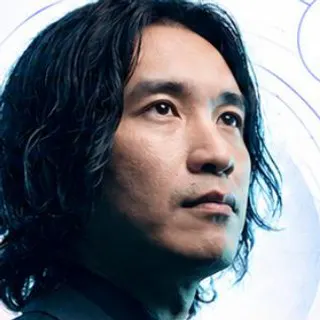
Masashi NishioMasashi Nishio
President & CEO, GridShare Japan
“We're connected to 40,000 devices, and we run 40,000 custom control plans, one for each customer”── Masashi Nishio, in this interview
- 1999From optimal control to ItochuStudied systems science at the Tokyo Institute of Technology’s graduate school, working on models that steer systems to their best state. At Itochu, worked in logistics, investment, corporate turnarounds, M&A and more
- 2011–2018An MBA, then a British AIEarned an MBA at the University of Michigan. Led the alliance with UK startup Moixa and founded GridShare Japan in 2018
- NOWPresident & CEO, GridShare JapanRan TRENDE, a peer-to-peer power trading company, before taking the top job in April 2025
Born in 1974, Nishio graduated from Chiba University’s engineering faculty, studied systems science at the Tokyo Institute of Technology, and joined Itochu in 1999. He brought a British battery AI to Japan and founded GridShare Japan in 2018. In 2022 he led the partnership with US-based Lunar Energy, which had acquired the AI’s developer. From June 2023 to March 2025 he ran TRENDE, a company that lets households trade power with each other, and in April 2025 he became president of GridShare Japan.
An autopilot for homes, pooled power for utilities
 Ogasawara
Thanks so much for making the time today! Let me jump right in. Who are GridShare Japan’s customers, and what do you do for them?
 Nishio
There are two main sides.
The first is households. Families with solar panels and a battery or an EcoCute sign up for our AI service on a monthly contract. The AI learns how each home uses power and runs the devices in the way that saves the most. For the customer, the power bill goes down with no effort.
The second is utilities. That one is about running many homes’ devices together. I’ll come back to it in a bit.
 Ogasawara
Let’s start with households, then. Is it like adding an “AI brain” to a battery people already have?
NishioExactly. If you have a supported device, you just sign up. Nothing extra gets installed in the house. Right now we support batteries from Itochu, Omron and Kyocera, and Daikin’s EcoCutes.
From there the AI takes care of everything, so customers don’t have to lift a finger.
OgasawaraWait, those are all different makers. Can you really run a battery and an EcoCute from two different companies together?
NishioThat’s our biggest strength.
Makers are good at running their own equipment. But switch to another brand or another kind of device and they don’t know it. Battery people know batteries, but not EcoCutes, and the other way round.
We can run devices from different makers together, from the customer’s point of view. And if you ran a battery and an EcoCute yourself, you’d have two different remotes. We get rid of all that and run the whole house for the best result. These days, you don’t even need a remote. The AI does it.
OgasawaraA home without remotes sounds pretty great, honestly. How much are people actually saving?
NishioCustomers can see the savings every day in the app. On average, with both a battery and an EcoCute, it comes to ¥4,635 a month, about ¥50,000 (roughly $330) a year.
We interview customers regularly, and we hear things like “my bill dropped 40 to 50%,” “it’s about ¥15,000 lower since April,” and “I leave everything to the AI and it’s fine.” That’s why hardly anyone cancels. Once people join, they basically stay.
After installing it, our power bill dropped sharply, to about half of last year’s. In April, for example, it was about ¥15,000 lower than a year earlier. I can really feel the savings.
Since we added the AI-controlled battery, our power bill is about 40% lower than before. We’re very happy with it.
I leave the battery entirely to the AI. It hasn’t caused any inconvenience in daily life, and it runs without problems.
Half the bill. ¥15,000 off in a single month. I had to read those customer comments twice. And all they did was let the AI handle it.
OgasawaraThat alone is impressive. But you mentioned a service for utilities at the start. What is that?
NishioEven after we optimize each home, there’s spare capacity left. We pool it and run it when a utility asks. That’s demand response.
When a utility says, “We’re short of power, please discharge the batteries,” or “There’s too much, please charge now,” we run the devices that way, with the customer’s consent. Sometimes that costs the customer a little, but the utility gives them points, so they come out ahead overall. We do this with Tohoku Electric, TEPCO and Chubu Electric Power Miraiz, and we’re talking with other utilities.
OgasawaraTens of thousands of batteries moving at once… isn’t that basically another big power plant?
NishioYes. It works out to something like a small power plant.
Beyond that, we’re preparing to trade customers’ power in the market. Owning these devices lowers your bill, earns you points, and eventually lets you trade. The more of these devices you own, the more you gain, so more people want them. That’s the ultimate goal.
OgasawaraListening to you, the power in a home starts to sound like a kind of asset.
NishioThat’s exactly the idea.
Households get lower bills and peace of mind. Stored power also helps in a blackout, so it doubles as disaster preparedness. Utilities get flexibility to balance the grid, and we pass that value back to customers. Our goal is to raise the value of the home and of the power system at the same time. If a device saves its owner money, people choose that device, so it’s good news for makers too.
When using your solar power beats selling it
OgasawaraLet’s talk about you for a bit. What did you study back at university?
NishioSystems engineering. You describe how something works in equations, then control it so it runs as well as possible. I also did a bit of research on what we’d now call AI.
But I wanted to use it in business rather than stay in research, so I joined Itochu. My first posting was logistics. I’d spent years on theory, and I wanted to see how physical things actually move.
OgasawaraFrom theory straight to a warehouse. What was that like?
NishioI joined in 1999, right in the dot-com bubble. I got the chance to work at a distribution center in the US, for one of the early companies selling sporting goods online.
Day to day, I checked whether the stock on the shelves matched the stock in the system, alongside the local staff. I also worked on the warehouse design. People held stock options and worked late into the night. That was my first taste of startup energy.
OgasawaraSo how did you end up in energy?
NishioNext I worked on acquisitions and venture investments. Investing is almost the same as running a business. You learn to judge which fields can work.
In 2011 the company sent me to do an MBA. The hot topic then was sustainability. Lithium-ion batteries and solar were taking off, and EVs were just hitting the road. Back in Japan, I started working on home battery sales. Most of what we do today, we were already debating in that MBA class.
OgasawaraSelling batteries, was there something that frustrated you?
NishioThere was. It came down to a program called FIT. Do you know it?
OgasawaraI’m embarrassed to say I don’t, really. How does it work?
NishioFIT stands for feed-in tariff. If you put solar on your roof, the utility buys the power at a fixed price for 10 years for a household. Back then the price was over ¥40 per kWh, and electricity was cheaper than now, so it was an incredible deal. The more you sold, the more you made. That’s why rooftop solar spread so fast in Japan.
But when the 10 years end, everything changes. The price drops to somewhere between ¥7 and ¥11.
OgasawaraWait, that low? So what are those households supposed to do?
NishioBuying power cost about ¥30 back then and about ¥40 now. If you sell at ¥8 and buy at ¥30, you’re far better off using it yourself. So you buy a battery, store the midday power and use it at night.
But nobody can check the weather, think about the family’s plans and flip the battery between charging and discharging every day. So let AI learn the tariff, the solar output and the household’s habits, and do it for you.
I also didn’t want a battery to be a one-time sale. I wanted it to keep saving customers money after they bought it, like a subscription. That’s when I came across Moixa, a startup in the UK.

An AI that ran a few hundred UK homes, scaled to tens of thousands in Japan
OgasawaraWhat kind of company was it?
NishioMoixa ran home batteries with AI in the UK, at a scale of a few hundred homes. Itochu formed a capital alliance with it and got the rights to roll out the AI in Japan. That’s how GridShare Japan began. In 2018 we started selling Itochu’s Smart Star batteries with the AI built in.
OgasawaraCould you use a British AI in Japan as it was?
NishioNo, that part was hard. We spent six months to a year adapting it. Everything was in English, and they didn’t know how Japan’s power system or prices worked.
Japanese utilities, for example, offer all kinds of time-of-use plans. We taught them those things one by one and built a Japanese version. Seven years on, they have Japanese engineers there too.
OgasawaraSo an AI that grew up in Japan then went global?
NishioExactly. In Japan we connect to about 40,000 devices. At the time, no other AI was running that many scattered devices at that scale.
That track record caught the eye of Lunar Energy in the US, which bought Moixa. Today the same AI runs about 100,000 batteries in the US and about 140,000 batteries and EcoCutes worldwide. The software team is in the UK, and they ship it to the US and Japan.
The AI reads each home’s weather and daily rhythm
OgasawaraEarlier I called it an “AI brain,” and I’ve been dying to know what’s inside. What is the AI actually doing in the house? I picture it deciding when to charge and when to use the power.
NishioThat’s roughly right. The key is how much information goes into that decision.
There’s the weather. There’s how the family uses power, which differs between weekdays and weekends, and between school holidays and normal weeks. Bigger solar panels make more power. Every home has a different tariff. Batteries come in different sizes. The AI takes all of that in and runs the home in the way that saves the most.
So with 40,000 customers, we’re running 40,000 custom control plans.
OgasawaraForty thousand! Can you really tailor it that finely?
NishioWe process a lot of data. Using each customer’s history, the AI forecasts ahead while solving, every day, the problem of how to run the home for the best result.
I actually studied this kind of thing in graduate school. It was all theory then, but I understood the logic. In a roundabout way, I’m now using what I learned as a student in business.
OgasawaraYour graduate research caught up with you 20 years later. When a new home joins, the AI knows nothing about it. How long until it gets smart?
NishioIt catches up with a home in about a week. After that, the longer someone uses it, the more accurate it gets. A big jump at first, then steady gains.
OgasawaraSome readers might think, “Why not just set it myself?” What’s the difference?
NishioSay tomorrow’s forecast is rain. A person would think, “It’s going to rain, so I’ll fill the battery tonight with cheap power.”
But solar panels make a fair amount of power even on cloudy or drizzly days. The AI always has a 48-hour forecast, so it can decide, “It’ll be cloudy, but we’ll still get this much. Buy only a little tonight and fill the rest from the sun.” It can make the best call, one that’s hard for a person to make.
The default modes built into the devices are designed to play it safe, so they don’t go that far. Doing this by hand every day? Practically impossible.

Your hot-water tank is the battery you already own
OgasawaraSo far we’ve talked about batteries, but I hear you’ve started controlling EcoCutes too. An EcoCute just heats water, doesn’t it? Why is that an electricity story?
NishioAn EcoCute usually heats water late at night with cheap power and stores it in a tank. It makes the morning and evening hot water in one go.
Meanwhile, even homes with a battery have spare solar at midday. The battery is often full by around noon, and after that the power has nowhere to go. So move the heating from the middle of the night to that sunny window.
An EcoCute heats slowly, drawing about 1.5 kW for four to five hours. Once heated, the water stays hot until evening. You’re storing electricity as hot water.
OgasawaraSo the tank works like a battery! Is there anything harder about it than a battery?
NishioYes. Nobody else offers home-by-home EcoCute control, because it’s technically hard.
In a home with only an EcoCute, there’s no data on how much the rooftop solar is producing. A battery knows, but an EcoCute isn’t connected to the power meter. If you can’t tell how much power you’ll get, shifting the heating to midday is risky. Running out of hot water is a big deal.
So we use satellite data. Beyond the weather forecast, we look down at the clouds, even how thick they are, and forecast what that customer’s roof will produce. Then we shift the heating accordingly. So far, we’re the only ones in the industry doing it.
OgasawaraIf you can’t see inside the house, look down from space. I love that. How do others do it?
NishioUsually you add a HEMS, a home energy management system, to measure the output, or customers have to type in when they can use power. A HEMS can cost ¥50,000 to ¥200,000.
We don’t need one, so customers can start any time, even years after buying the equipment. They just connect the EcoCute to home Wi-Fi and register it in the maker’s app. Once they sign up, we connect to it.
OgasawaraI’m curious how that sky-based forecast plays out in real homes. Could you walk us through a real customer’s day?
NishioWe have real customer data. Lay the AI’s forecast over what actually happened, and they almost match.
Take one home with both a battery and an EcoCute on a clear day, May 30 this year. While solar charged the battery, the EcoCute heated water twice around midday. The tank went from 40% to 100%, a 60% top-up that normally happens overnight. That day moved about 6 kWh to midday. At ¥30 per kWh for late-night power, that’s about ¥180 saved in one day.
Here’s a fun one: a customer in Matsudo, east of Tokyo, on June 18, a day of drizzle and cloud. The panels are rated at 6 kW but peaked at only 3.6 kW. Still, they were producing. A person would have heated the water the night before because rain was forecast. The AI read the weather the previous day, skipped the overnight heating and decided midday would be enough.
It heated the water first, then switched straight to charging the battery the moment it finished, so the two never competed for power. That day shifted 2 kWh, about ¥60.

 Ogasawara
¥180 on a sunny day, ¥60 even when it rains. Small, but it adds up. What does that come to in a month?
NishioIt really does add up. Batteries save ¥2,115 a month on average. EcoCutes, based on trial data, save about ¥2,520. Together that’s ¥4,635 a month, roughly ¥50,000 (about $330) a year.
The clearest measure is how much of your solar power you use at home. With solar alone it’s about 30%; the other 70% gets sold cheaply. Add AI-run EcoCute and it’s about 50%. A battery gets you about 70%, and both together about 90%.


Connecting more devices
OgasawaraYou said earlier that working across brands is your biggest strength. Still, with every maker doing things differently, connecting must be tough. Is there anything you wish technology would solve?
NishioIf I’m honest, I wish makers would standardize their specs. Who wouldn’t?
But adapting to each of them is part of our know-how. Our job is to take away the inconvenience, and clearing those technical hurdles one by one is the value we bring. Technically, it’s all doable.
OgasawaraConnecting more devices must take a lot of development. Where will last year’s funding go?
NishioMostly development: connecting more kinds of devices. We want a world where whatever combination of brands a customer buys, they can join GridShare. Right now it’s batteries and EcoCutes, and we’ll keep expanding. Makers have their own policies and technical constraints, so we work through them one at a time.
The rest goes to letting people know what it does, so more of them use it. We also want our current customers to be happier, so we’re improving the app and giving points to people who answer our surveys.
It may be small, but step by step, I think we can help Japan decarbonize.
Power is shifting from plants to timing, and to homes
After the interview, I set Nishio’s three ideas, heating at noon, working across brands and pooling homes, against data from Japan and abroad. It looks like a story about household bills. Underneath, it hints at a change in how Japan uses electricity.
Japan’s 10 million EcoCutes are a sleeping battery
The EcoCute launched in 2001. Twenty-four years later, shipments in Japan have passed 10 million. Picture a giant hot-water bottle set beside home after home across the country. Almost all of them were built to heat at night.
What if that heating moved to sunny middays? A government study group estimated, as reported by ITmedia, that if half of all EcoCutes heated at midday, 5.2 billion kWh a year of demand would shift into daylight. That’s more than three times the roughly 1.6 billion kWh of solar and wind Japan switched off in fiscal 2024. (It’s an annual comparison; the timing won’t line up perfectly.)
Japan doesn’t need millions of new batteries to start. The tanks already in people’s homes can stand in for them. What’s been missing is a brain to run them and a way to reach them. In a country where only 2.7% of homes have a HEMS, GridShare reads output from the clouds and runs EcoCutes with no extra hardware. I see its work as waking up those 10 million sleeping tanks.
The company that spans every brand becomes the home’s operating system
On a smartphone, the camera, maps and payments come from different companies, yet they all run on one device. That works because there’s an operating system in between.
Home energy isn’t there yet. The battery has one maker’s app, the EcoCute has another maker’s remote. When Nishio says “battery people don’t understand EcoCutes,” it’s as if every app needed its own phone.
GridShare adds a layer on top that sees the whole house. That’s how it can decide, on whole-home economics, whether to fill the battery or heat the water first. Once Japan’s DR-ready rules take effect, connecting will get easier. But the job of deciding for the whole house can only sit outside any single maker. As standards spread, I think that layer gets more valuable, not less.
Homes are turning from places that buy power into places that supply it
Resale apps turned the clothes and books in our closets into things we could sell. Electricity is heading the same way.
In California, Sunrun has pooled batteries in more than 80,000 homes and can send out up to 425 MW when evening power runs short. In Germany, about 2.2 million batteries, mostly in homes, were running as of the end of July 2025, according to the German Solar Association.
And Japan? The Japan Electrical Manufacturers’ Association counts 1.136 million home batteries shipped. That’s about half of Germany’s count. Add 10 million EcoCutes, though, and the picture changes completely. And from fiscal 2026, home devices can take part in the power market.
What to watch from here depends on who you are.
- Housing, equipment and utility companies: Homes are shifting from “sell and done” to “connect and keep delivering value.” The winners will design the connection in when they sell the equipment.
- Engineers and data people: Reading output from the weather, learning each household’s habits, running tens of thousands of devices at once. Forecasting, optimization and fleet control are running at real scale inside Japanese homes right now.
- Students and future homeowners: Rooftop power is moving from something you sell, to something you use up, to something you pool and trade. How we value a home is starting to change.
The AI era, which eats so much electricity, may also be the era when home power starts holding up the grid. That’s the idea I most wanted to bring home from this interview.
Using the rooftop’s power inside the home
The sun shines at one time; people use power at another. That simple gap leads to switched-off plants at noon and expensive power at night.
GridShare Japan closes the gap with equipment people already own. It runs batteries smartly, heats water at noon and pools tens of thousands of homes into something a utility can use. The more homes that let AI handle their power bill, the less of Japan’s sunny afternoons go to waste.
SOURCES ── References
- GridShare Japan, Company profile (in Japanese)
- GridShare Japan, About GridShare (in Japanese)
- GridShare Japan, Service (in Japanese)
- GridShare Japan, FAQ (in Japanese)
- GridShare Japan, How we estimate savings (Aug 2026, in Japanese)
- Yagihashi, Kobayashi and Mori, Field evaluation of AI charge control of a home battery (Architectural Institute of Japan, in Japanese)
- GridShare Japan, ¥1.68 billion funding and five new shareholders (Dec 4, 2025, in Japanese)
- GridShare Japan, Selected for TEPCO Carbon Neutral Program (Jun 2025, in Japanese)
- GridShare Japan, AI control for Daikin EcoCute (Apr 20, 2026, in Japanese)
- GridShare Japan, Home demand response with Chubu Electric Power Miraiz (Jun 18, 2026, in Japanese)
- GridShare Japan, Support for Kyocera Enerezza batteries (Jul 8, 2026, in Japanese)
- Itochu, Capital and business alliance with Moixa (Jan 29, 2018, in Japanese)
- UK Government, Smart battery business signs deal to supply in Japan (Feb 6, 2018)
- Lunar Energy, Official press release (Aug 2022)
- Lunar Energy, Lunar Energy raises $232 million (Feb 4, 2026)
- Sunrun, Sunrun’s California distributed power plant expands (Jul 14, 2026)
- Agency for Natural Resources and Energy, Next-generation grid WG, outlook on renewable curtailment (Mar 16, 2026, in Japanese)
- Japan Electric Power Exchange, Spot market data
- Agency for Natural Resources and Energy, Solar after the buyback period (in Japanese)
- Agency for Natural Resources and Energy, End of buyback terms for home solar (Feb 19, 2019, in Japanese)
- Kaden Watch, Surplus solar buyback program (2009, in Japanese)
- TEPCO Energy Partner, Standard renewable buyback plan (in Japanese)
- Kyushu Electric Power, Buyback after the FIT term (in Japanese)
- Panasonic, Launch of the Ohisama EcoCute (Mar 2, 2022, in Japanese)
- Japan Refrigeration and Air Conditioning Industry Association, EcoCute passes 10 million units (Mar 2025, in Japanese)
- Japan Electrical Manufacturers’ Association, Energy storage shipments FY2025 (Jun 5, 2026, in Japanese)
- Meteorological Satellite Center, Himawari observations (in Japanese)
- Ministry of the Environment, Household CO2 survey FY2023 (in Japanese)
- ITmedia Smart Japan, What DR-ready means (Sep 27, 2024, in Japanese)
- Agency for Natural Resources and Energy, Seventh Strategic Energy Plan (Feb 18, 2025, in Japanese)
- OCCTO, Low-voltage resources in the balancing market (Sep 26, 2025, in Japanese)
- BSW-Solar, Battery storage press release (Oct 6, 2025, in German)
- Agency for Natural Resources and Energy, Strategic Energy Plan (in Japanese)
- Ministry of the Environment, Household electricity use, FY2023 (in Japanese)


