One extra molecule, and in three rounds it takes over: the self-copying reaction behind the 2026 Nobel Prize in Chemistry
Start with 1,000,001 right-handed molecules and 1,000,000 left-handed ones. Three rounds of one reaction later, the right-handed kind makes up more than 99.7% of the mix. Japanese chemist Kenso Soai built that reaction, and it has just earned him the 2026 Nobel Prize in Chemistry, shared with France's Henri B. Kagan. Here is who discovered what, why your body uses only one "hand" of its molecules, and how the same chemistry shapes the medicines you take.
 DATA WORLD Editorial Team
Feature · 14 min
DATA WORLD Editorial Team
Feature · 14 min

The 2026 Nobel Prize in Chemistry goes to Kenso Soai of Japan, a 76-year-old professor emeritus at the Tokyo University of Science.
The Royal Swedish Academy of Sciences announced it on October 7. Soai shares the prize with Henri B. Kagan, a professor emeritus in France.
The two pursued their research separately, in different labs in France and Japan. In the Academy's words, Kagan "took the first decisive step" in 1986, and Soai "took the next step". Think of them as two people who solved the same puzzle, one piece after the other.
For Japan, it is a second chemistry prize in two years, following Susumu Kitagawa in 2025, and its 10th chemistry laureate overall. Counting all fields, Soai is the 31st Japanese individual to win a Nobel.

When the call came, Soai was out grocery shopping at a supermarket near his home in Shiki, Saitama Prefecture, The Japan Times reports. At that evening's press conference he joked that he had figured "no one would complain" if he won, and the room burst out laughing.
So what did the two of them discover? The official citation reads "for the discovery of non-linear effects and autocatalysis in asymmetric organic synthesis." The first half, non-linear effects, is Kagan's. The second half, autocatalysis, is Soai's.
Honestly, that sentence meant nothing to me the first time I read it. But the idea underneath is surprisingly simple, and the numbers are wild.
Here it is in three lines:
- The molecules in your body come in "right-handed" and "left-handed" versions
They are identical in shape, just mirror-reversed. And for some reason, living things are built almost entirely from one version. - Soai found a reaction in which "the majority multiplies on its own"
Start with 1,000,001 right-handed molecules and 1,000,000 left-handed ones. After three rounds, the mix was almost entirely right-handed. - It is the first experimental clue to a mystery more than 150 years old: why is life one-handed?
Kagan, in France, took the step just before it, in 1986.

Soai reactiona reaction that copies itself
Each new molecule helps make more molecules of its own hand, growing a tiny head start into almost everything
- 1953A physicist's predictionMath shows that if three conditions are met, a one-handed world can arise
- 1986Kagan's discovery (France)Mix both hands in a catalyst, and the majority still works harder
- 1995Soai reaction unveiledA self-copying reaction lifts a 2% excess to 87%
- 2003From 1,000,001 vs 1,000,000Three rounds, and nearly all one hand
- NOW2026 Nobel Prize in ChemistryShared with Henri B. Kagan
The Nobel committee calls it one of "the most spectacular chemical experiments ever conducted". The reason: it was the first chemical reaction outside living things to produce molecules of essentially one hand.
Soai was born in Hiroshima in 1950, studied at the University of Tokyo, and has done his research at the Tokyo University of Science since 1981. When students gathered to congratulate him on campus the day after the announcement, he said everything had been discovered right there, together with his students.
Four questions about the 2026 Chemistry Nobel, answered up front
A reaction where the majority multiplies by itself offers a clue to life's origins and connects to modern medicine
Q1Why is it such a big deal?
Q2What are right- and left-handed molecules?
Q3How does one hand take over?
Q4Does it affect my life?
Why it is called one of the most spectacular experiments
You can feel the excitement in the Nobel committee's own explainer. Soai's reaction, it says, is one of "the most spectacular chemical experiments ever conducted". Why such high praise?
Because it cracks open one of chemistry's oldest puzzles. The molecules that make up living things come in only one "hand." Yet when chemists make the same kinds of molecules in a flask, they always get a 50/50 mix of both hands. Life could do something chemists could not, and nobody knew how.
In 1953, the British theoretical physicist Charles Frank proposed an answer in mathematical form. As the Nobel committee summarizes it, a reaction that meets three conditions could produce a one-handed world:
- Condition 1: make more of one hand
A helper molecule that speeds up the reaction (a catalyst) produces more of one hand than the other. - Condition 2: the majority gets stronger, the minority weaker
A small imbalance grows wider as the reaction runs. - Condition 3: the product becomes its own catalyst
The molecule helps make more copies of itself. Chemists call this autocatalysis.
But no one could build a reaction that met all three. Frank's model became a kind of classroom puzzle that professors set for their students.
The 2026 prize tells the story of how that puzzle was filled in, piece by piece, over decades. Condition 1 was already covered, by work such as the research that earned Ryoji Noyori and others the 2001 Nobel Prize in Chemistry. Kagan met condition 2 in 1986. Soai added condition 3 and brought all three together.

Japanese chemistry has long been strong in this field of making molecules in one hand. With this prize, two of Japan's ten chemistry laureates were honored for work on molecular handedness.
Molecules have right and left hands too
A right-handed glove won't fit your left hand. Same shape, same size, but mirror-reversed, so the two never line up. Molecules work exactly the same way.
Take alanine, one of the amino acids your body uses to build proteins. At its center sits a single carbon atom with four arms. On the ends of those arms are a hydrogen atom, a methyl group (a small cluster of carbon and hydrogen), an amino group (the part containing nitrogen) and a carboxyl group (the part that makes acids sour). All four parts are different.
When a carbon carries four different parts, there are two ways to arrange them, and they are mirror images of each other. Same parts, but no matter how you rotate one, it never matches the other. Those are a molecule's right and left hands.

If the only difference is direction, does it matter? Inside your body, enormously. The Nobel committee compares it to a locksmith who can only ever cut keys in mirror-image pairs, when just one of the pair fits the lock. Molecules in the body are the same: only the hand that fits works properly.
And your body is remarkably consistent. Nearly all the amino acids in your proteins are one hand (the L form, often called left-handed). The sugar in your DNA is one hand too (the D form).
Yet when chemists make similar molecules in a flask, they always get half of each. Here's why.
In many reactions, a new part attaches to a flat molecule from either above or below. From above, you get one hand. From below, the other. Which side it comes from is a coin toss, so even if you make billions of molecules, you end up with almost exactly half of each.
So how do chemists make just one hand? By blocking one side. If the catalyst is itself one-handed, it covers one face of the flat molecule. New parts can only attach from the open side, and one hand comes out ahead. Noyori's 2001 Nobel Prize was for designing exactly this kind of side-blocking catalyst.
But that raises an awkward question. To make one hand, you need a one-handed catalyst. So on the early Earth, before life existed, where did the very first one-handed molecules come from? Frank's three conditions, from Part 01, were an answer to that riddle. The key is condition 3. If the product itself becomes the catalyst that makes more of it, one hand can multiply without any one-handed helper from outside.
The majority multiplies on its own
Soai is the chemist who actually built that self-copying reaction. And inside it, Soai's idea and Kagan's discovery work together.
The ingredients are a flat molecule containing a ring called pyrimidine (call it ingredient A) and a zinc compound (ingredient B). Mix them, and a part from B attaches to A from above or below, making a type of alcohol (product C). So far this is an ordinary reaction, and C comes in right- and left-handed forms.
Here is where it gets strange. Product C binds to zinc and becomes a side-blocking catalyst itself. A right-handed C blocks the side that produces more right-handed C, and a left-handed C does the same for left-handed C. Each product helps make more molecules of its own hand. It's like a photocopier that keeps printing copies of whatever hand is sitting on the glass.

But copying alone would make both hands grow at the same rate. Something else must widen the gap. That something is the "non-linear effect" Kagan discovered in 1986.
Kagan wasn't studying Soai's reaction. He was working on other reactions designed to favor one hand, such as oxidations. At the time, chemists assumed a simple proportional rule: if the catalyst is a little mixed, the product will be mixed to the same degree. Kagan doubted that. What if, inside the catalyst, each metal atom holds two of the one-handed molecules at once? Then a catalyst built from a mix of hands would form three kinds of pairs.
Say you build the catalyst from molecules that are 75% right-handed and 25% left-handed. The pairs then form by simple probability:
- Right + Right
0.75 × 0.75 = about 56% of all pairs. - Right + Left
0.75 × 0.25 × 2 = about 38%. This mixed pair works far more slowly than the other two. - Left + Left
0.25 × 0.25 = about 6%.

Treat the sluggish mixed pairs as zero, and the working pairs are 56 Right + Right against 6 Left + Left, roughly 90 to 10. You started at 75 to 25, but the reaction runs as if it were 90 to 10. The trick is that most of the minority's molecules get tied up in mixed pairs and can't do anything. The smaller side gets dragged down the most.
Kagan demonstrated this effect in three different reactions in 1986, meeting Frank's condition 2. His discovery set off a wave of interest, and Soai was one of the many chemists who began exploring it. While studying a reaction with a strong non-linear effect, he noticed that its catalyst and its product looked strikingly alike. Could he design a reaction in which the product simply becomes the catalyst? That question was his path to condition 3.
That's why two mechanisms are thought to work together in Soai's reaction. The majority makes more copies of itself (Soai's autocatalysis), while the minority gets tied up in mixed pairs and falls behind (Kagan's non-linear effect). Put the two together, and the gap widens fast.
In 2003, Soai's team started from almost no difference at all: 1,000,001 right-handed molecules for every 1,000,000 left-handed ones. Each time ingredients A and B were used up, they added fresh ones and counted that as one round.

The result: the right-handed share hit about 79% after the first round, 99.5% after the second, and more than 99.7% after the third. Along the way, the amount of the molecule grew about 630,000-fold.
I actually said "wait, what?" out loud when I worked through those numbers.A difference of one in two million becomes "almost everything" in just three rounds. Getting there was anything but easy. When Soai first found a self-copying reaction in 1990, the imbalance actually shrank, from 86% in the catalyst to 35% in the product. He kept trying different molecules, published a reaction that amplified the imbalance in Nature in 1995, and spent eight more years reaching the 2003 result.
Medicines and flavors made in one hand
Molecular handedness is closer to your daily life than it sounds. The most obvious example is medicine.
Drugs work in the body by fitting into their targets like a key into a lock. The same compound can be effective in one hand and useless, or even harmful, in the other. That's why modern drugs are made in the working hand whenever possible. A study of 278 new small-molecule drugs approved in the United States between 2013 and 2022 found that 59% contained just one hand. Drugs sold as a 50/50 mix of both hands fell from 11% in the previous decade to 3.6%.

Take L-DOPA, a treatment for Parkinson's disease. According to the Nobel committee's 2001 explainer, chemistry that controls handedness made it possible to produce the drug industrially at 97.5% of one hand. The same technology is used for heart medicines, food flavors and sweeteners, and insecticides.
Kagan's non-linear effect has become an everyday tool for chemists designing new reactions. If the product's imbalance doesn't track the catalyst's, that tells chemists something about how the catalyst works inside. They can use that to fine-tune the reaction and get a purer single hand. The Nobel committee calls it vital for every company that makes substances meant to interact with living things, from pharmaceuticals to flavors, scents and agricultural chemicals.
Soai's reaction, by contrast, is basic research aimed first at the mystery of life. Kagan's discovery became a working tool for industry, while Soai's reaction took on the origins of life. Two discoveries born from the same puzzle about handedness, honored together.
How much of life's mystery is solved?
So where does that first one-molecule head start come from?
Soai's team ran the reaction 37 times with no imbalance added at all. Every time, one hand surged ahead, but the scorecard was right 18 times and left 19 times. Which hand won was pure chance. The reaction picks up a random, invisibly small difference and blows it up.
Flip it around, and a tiny nudge decides the winner. Shining circularly polarized light, a kind of twisted light, on the reaction, or adding a right- or left-handed quartz crystal, was enough to steer it to that hand.
Space may provide such nudges. Astronomers have observed twisted light in a star-forming region of the Orion Nebula. And meteorites that fell to Earth contain amino-acid-like molecules with 7% to 9% more of one hand.
That doesn't mean the mystery of life is solved. The Nobel committee's scientific background calls the Soai reaction an important "proof of concept": an experiment showing that something is possible. It relies on a special zinc compound, and it is very different from the water-based chemistry of living things. Researchers around the world are now trying to make the same thing happen with amino acids and sugars.
Even so, showing for the first time, in a flask, that a tiny difference can grow into a one-handed world is a big deal. It gives anyone thinking about the origins of life solid ground to stand on.
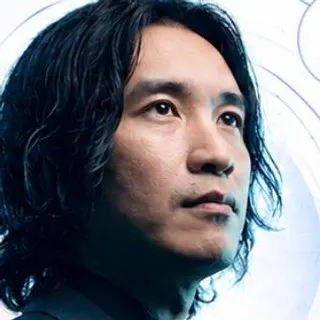
What turns one molecule into a whole world isn't the size of the gap. It's the mechanism that grows it
Three days after the announcement, I went back through the official explainers and papers and lined up the numbers. Two things stood out, and they go beyond chemistry.
42 years from prediction to experiment, 31 more to the prize
Frank's prediction came in 1953. Soai published his amplifying reaction in 1995. That's 42 years. From there to the Nobel, another 31. Kagan's discovery is now 40 years old too.
Nearly half a century for a classroom puzzle to become a real reaction, then three more decades for the world to recognize it. Those numbers include the years Soai spent after 1990, when his first reaction actually shrank the imbalance, swapping molecules and trying again. Basic research doesn't pay off quickly. That's exactly why it's so astonishing when it does.
The winner is random, but the world still ends up one-handed
Eighteen to 19 out of 37 runs. There's no telling which hand will win. Yet every time, one hand wins, and the winner takes nearly everything.
This is the part I find most fascinating. Life may not use L-amino acids because the L form is somehow better. It may have been a first random fluke, or a slight bias delivered from space, picked up and multiplied by a mechanism like this one. What matters is less the size of the difference than the mechanism that amplifies it. I find it strangely encouraging that a difference of one in two million can decide the shape of a whole world.
SOURCES ── References
- Nobel Prize Outreach, The Nobel Prize in Chemistry 2026: Press release (October 7, 2026)
- Nobel Prize Outreach, Henri B. Kagan: Facts (2026)
- Nobel Prize Outreach, Popular information: They solved chemistry's asymmetric mystery (October 7, 2026)
- The Royal Swedish Academy of Sciences, Scientific background to the Nobel Prize in Chemistry 2026 (October 7, 2026)
- Tokyo University of Science, Professor Emeritus Kenso Soai awarded the Nobel Prize in Chemistry (October 7, 2026) (in Japanese)
- nippon.com, Kenso Soai of Tokyo University of Science among Nobel chemistry laureates (October 7, 2026) (in Japanese)
- The Japan Times, Nobel winner Kenso Soai says he understood the significance of his research (October 8, 2026)
- The Sankei Shimbun via Yahoo! News Japan, Soai jokes at Nobel press conference: "No one will complain" (October 7, 2026) (in Japanese)
- Soai, Shibata, Morioka, Choji, Asymmetric autocatalysis and amplification of enantiomeric excess of a chiral molecule (Nature, 1995)
- Sato, Urabe, Ishiguro, Shibata, Soai, Amplification of Chirality from Extremely Low to Greater than 99.5% ee by Asymmetric Autocatalysis (Angewandte Chemie, 2003)
- Kenso Soai, Asymmetric autocatalysis. Chiral symmetry breaking and the origins of homochirality of organic molecules (Proceedings of the Japan Academy, Series B, 2019)
- Puchot, Kagan et al., Nonlinear effects in asymmetric synthesis. Examples in asymmetric oxidations and aldolization reactions (Journal of the American Chemical Society, 1986)
- F. C. Frank, On spontaneous asymmetric synthesis (Biochimica et Biophysica Acta, 1953)
- Kawasaki, Soai et al., Enantioselective Synthesis of Near Enantiopure Compound by Asymmetric Autocatalysis Triggered by Asymmetric Photolysis with Circularly Polarized Light (Journal of the American Chemical Society, 2005)
- Soai et al., d- and l-Quartz-Promoted Highly Enantioselective Synthesis of a Chiral Organic Compound (Journal of the American Chemical Society, 1999)
- Bailey et al., Circular Polarization in Star-Formation Regions: Implications for Biomolecular Homochirality (Science, 1998)
- Cronin & Pizzarello, Enantiomeric excesses in meteoritic amino acids (Science, 1997)
- McVicker & O'Boyle, Chirality of New Drug Approvals (2013–2022): Trends and Perspectives (Journal of Medicinal Chemistry, 2024)
- Nobel Prize Outreach, The Nobel Prize in Chemistry 2001
- Nobel Prize Outreach, The Nobel Prize in Chemistry 2001: Popular information
- The Yomiuri Shimbun via Yahoo! News Japan, Kenso Soai congratulated by students at Tokyo University of Science (October 8, 2026) (in Japanese)


